How Long Before You Can Drive on New Asphalt?
Key Takeaways
|
That fresh black surface can tempt you to pull in immediately, but if you drive on new asphalt too soon, one turn of the wheel can leave a lasting reminder. Wait at least 48 to 72 hours before using a standard passenger car.
Fresh asphalt driveways remain vulnerable after they feel firm underfoot. South Florida heat, vehicle weight, pavement thickness, shade, and recent rain can extend the wait.
Trinity Asphalt Paving handles asphalt paving in West Palm Beach and surrounding communities. We install, resurface, repair, seal, and patch driveways, sidewalks, and parking lots for homeowners, businesses, condo associations, and HOAs.
When Can You Drive on New Asphalt?
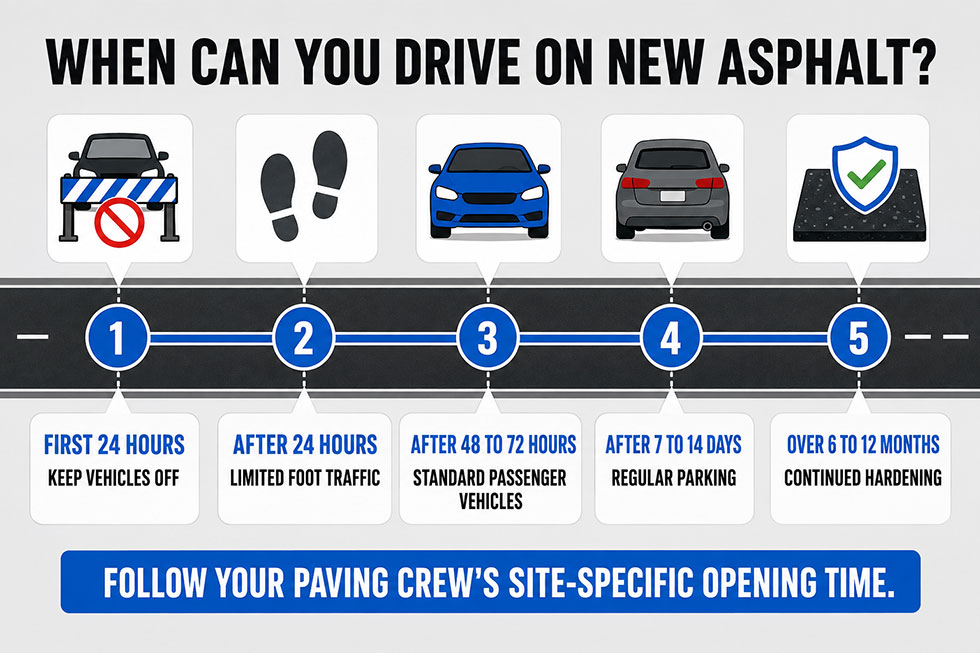
A standard car can usually cross properly installed asphalt after 48 to 72 hours. Wait 7 to 14 days before parking regularly, especially during hot weather.
Keep all vehicles off freshly paved asphalt for the first 24 hours. Limited foot traffic may begin after 24 hours if the paving crew approves it. Standard passenger vehicles can usually use the surface after 48 to 72 hours. Heavy trucks, RVs, trailers, and moving vans need more time.
Wait 7 to 14 days before parking on the asphalt regularly. The pavement will continue hardening for 6 to 12 months after installation, so follow the site-specific opening time provided by your paving crew.
These are general ranges. We give each customer a site-specific opening time based on the pavement and conditions.
Asphalt Cooling and Curing Are Different
 Conventional dense-graded hot-mix asphalt does not cure like concrete. It becomes traffic-ready as it cools and gains stability, a distinction explained in this technical discussion of hot-mix asphalt cooling.
The binder continues hardening long after the driveway opens. Full hardening may take 6 to 12 months, but that does not mean the surface must remain unused. It means the pavement needs extra care while it is young.
What Can Extend the Wait Time?
Surface Heat and Shade
Dark pavement absorbs heat and can soften again during a hot afternoon. An open driveway in Flamingo Park or Northwood may stay warmer than a shaded section beneath mature trees in Boca Raton or Delray Beach.
Avoid long parking periods during the hottest part of the day at first. If a tire leaves a faint mark, move the vehicle without twisting the steering wheel.
Installation Type and Vehicle Weight
A full-depth new blacktop driveway installation may have different opening instructions than resurfacing over old asphalt. Mix design, lift thickness, compaction, base stability, and drainage all affect timing.
Long driveways in Loxahatchee and The Acreage often carry landscaping trucks and delivery vehicles. Wellington properties may also receive horse trailers. Those loads require a longer wait than a passenger car at a Royal Palm Beach home.
Does Rain and Hurricane Season Make it Take Longer?
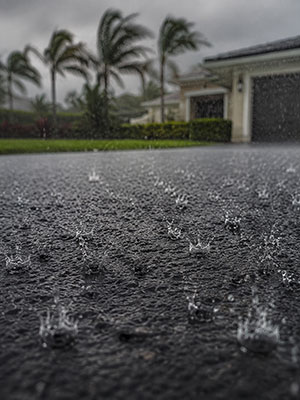 Planning asphalt paving in West Palm Beach during the rainy months requires a dry installation window. Florida paving standards do not permit asphalt placement while rain is falling or water remains on the surface. A saturated base may need time to drain and dry before work begins.
Rain after proper placement and compaction usually does not restart the 48-to-72-hour waiting period. It also does not make the pavement ready sooner. After a heavy downpour, check for standing water, debris, or washed-out edges. Before you drive on new asphalt after a storm, follow the opening time provided by the crew.
The Atlantic hurricane season runs from June 1 through November 30. Tropical systems can delay paving, soak the base, flood low areas, and bring heavy cleanup vehicles onto the property.
If a storm threatens during the first 72 hours, call the contractor. Follow evacuation orders first. Keep generators, trailers, dumpsters, and equipment off fresh pavement when possible, and place wide protective pads beneath jacks or narrow supports.
What Happens If You Drive on It Too Soon?
Early vehicle traffic can leave tire scuffs, shallow depressions, ruts, gouges, or broken edges. Turning the steering wheel while stopped is especially damaging because the tires grind against one small area.
A light surface mark may remain cosmetic. Deep impressions, shifting pavement, or soft areas can point to a larger problem and deserve an inspection.
How to Protect the Surface After It Opens
Simple habits help protect new asphalt driveways:
- Keep the vehicle moving while turning.
- Avoid sudden braking and hard acceleration.
- Change parking positions during the early weeks.
- Keep trucks, trailers, and RVs off longer.
- Use wide pads beneath kickstands, jacks, and equipment.
- Stay away from unsupported pavement edges.
Once the surface is open for normal use, follow a long-term driveway maintenance plan that includes cleaning, inspections, timely repairs, and sealcoating at the proper stage.
When Should You Call the Contractor?
Call if you see deep tire impressions, spreading cracks, standing water, crumbling edges, or pavement that moves beneath a normal car. Photos can help the contractor assess the problem quickly, but some conditions require an on-site inspection.
Give Fresh Asphalt the Time It Needs
With three generations of paving experience, our licensed and insured team understands how local heat, rain, drainage, and traffic affect new and resurfaced asphalt driveways.
Trinity Asphalt Paving serves West Palm Beach, Loxahatchee, Royal Palm Beach, Wellington, Boca Raton, Delray Beach, and surrounding South Florida communities.
Click here or give us a call at 561-889-2615 for a free, no-obligation quote.
Trinity Asphalt Paving, Inc.
📍 6643 Royal Palm Beach Blvd. West Palm Beach, FL 33412
📞 Call 561-889-2615
- Posted by Trinity Asphalt Paving
- On August 20, 2026
- 0 Comment