
Asphalt Driveway Thickness: Is Yours Built to Last?
Key Takeaways
|
 A driveway can look ready for a magazine cover and still lack the asphalt driveway thickness it needs to carry your car. Lasting pavement needs the right finished depth, a stable foundation and drainage that moves water away. A smooth black surface alone proves none of those things.
Your West Palm Beach driveway faces hot pavement, heavy rain and repeated vehicle loads. Delivery trucks, landscaping equipment and parked trailers add stress. The right construction plan accounts for those conditions before the first truck delivers asphalt.
At Trinity Asphalt Paving, Inc., we install and maintain driveways, sidewalks and parking lots for homes and businesses throughout South Florida. Our family-owned paving team brings three generations of experience to new installations, resurfacing, repairs, sealing and patching, including projects for condo associations and HOAs.
From Loxahatchees to Boca Raton, call us today for a FREE quote! 561-889-2615
What Does Asphalt Driveway Thickness Actually Measure?
Thickness means the finished depth of the asphalt after the crew compacts it. It does not include the aggregate base or the soil beneath that base.
Loose asphalt contains spaces between its particles. Rolling brings those particles closer together and reduces the layer’s depth. A proposal that promises “two inches” needs to explain if that measurement applies before or after compaction.
Three parts work together beneath your tires:
- Asphalt surface: Distributes vehicle loads and provides the driving surface.
- Aggregate base: Supports the asphalt and transfers loads to the ground.
- Subgrade: The prepared soil beneath the pavement structure.
Adding asphalt over unstable soil does not create a dependable driveway. Each layer needs the support beneath it.
How Thick Should Your Driveway Be?
The right depth depends on the pavement design. Vehicle loads, soil strength, base preparation, drainage and asphalt mix all affect that decision.
A published residential design example from the Colorado Asphalt Pavement Association combines a 2-inch bottom course with a 1.5-inch surface course. That creates 3.5 inches of asphalt. Its driveway construction guidance also discusses a 6–8-inch crushed aggregate base.
Those figures describe a design example, not a requirement for every Florida property. Your contractor needs to match the pavement structure to your site.
The size of the stone within the asphalt mix also affects placement. The Asphalt Institute explains that dense-graded layers need enough depth for the aggregate particles to move into position during compaction. Its example pairs ½-inch nominal maximum aggregate with a compacted layer of 1½–2 inches.
That measurement concerns an individual layer. It does not establish the total pavement depth your property requires.
Plan your driveway around how you use it today and what you expect it to handle later. Adding an RV parking space or bringing work trucks onto the property changes the demands on the pavement. Before paving, tell your contractor about those plans so the design accounts for them. If you want to resurface an older driveway, start with an inspection to confirm the existing structure can support another layer.
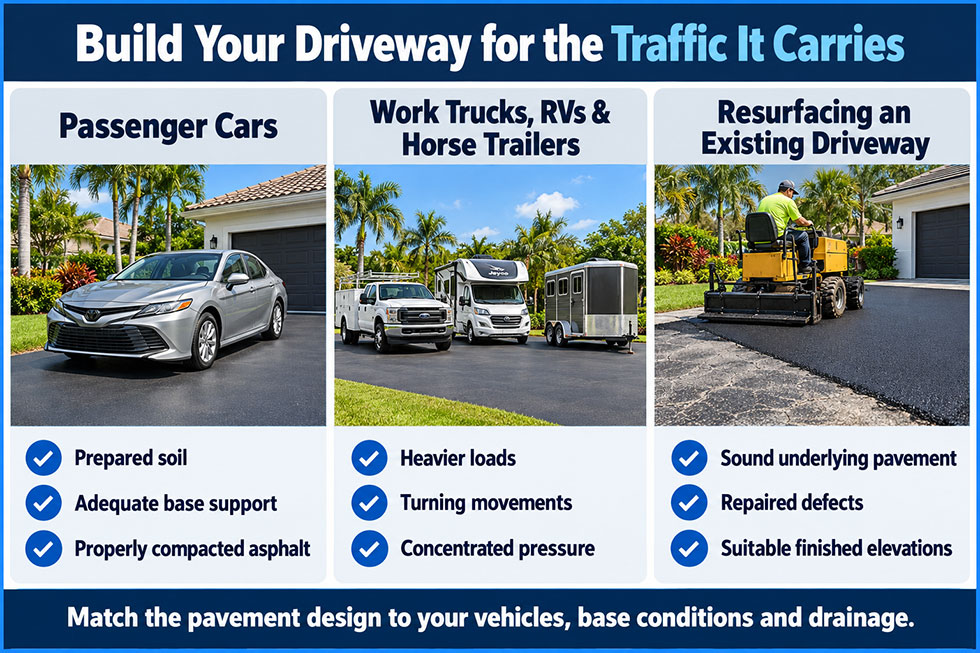
For new driveway installations, ask for the finished compacted depth and base preparation in writing.
Why a Strong Base Matters as Much as the Surface
Think of the base as the support system you cannot see. When it shifts, softens or settles, the asphalt above it loses support.
Long driveways in Loxahatchee and The Acreage need attention to ground conditions across the entire route. One weak section can become the spot where tires leave depressions or cracks spread.
Water also changes the equation. A low area that collects runoff allows moisture to reach pavement defects and weaken supporting material. Adding depth above that problem leaves the cause in place.
Your West Palm Beach driveway needs grading that directs runoff away from the pavement and garage. Around established Northwood homes, the design must account for existing entrances, sidewalks and street connections.
The goal is a pavement structure that carries traffic and sheds water.
Your Vehicles Help Determine the Right Design
A driveway serving two passenger cars has different demands from one carrying loaded work trucks.
At a Wellington equestrian property, horse trailers create loads that belong in the construction discussion. Trailer jacks also concentrate weight onto small contact points. That differs from the load spread across vehicle tires.
A homeowner in Boca Raton planning an RV parking area should raise that use before paving begins. A property in Delray Beach receiving frequent delivery or service vehicles needs the same attention to expected traffic.
Tell your contractor what uses the driveway now and what you plan to park there later. That information helps shape the base, asphalt layers and edge support.
Signs Your Driveway Needs a Closer Inspection
You cannot diagnose pavement depth from its color. A dark, freshly sealed driveway can still have structural problems.
Watch for:
- Depressions along tire paths.
- Sinking sections or movement under vehicles.
- Crumbling edges beside grass or soil.
- Connected cracks that form a web.
- Potholes that return after repairs.
- Water collecting in the same low spots.
These symptoms do not prove the asphalt is too thin. Weak base material, poor compaction, drainage problems and loads beyond the pavement’s design can produce similar damage.
For a Lake Ida homeowner, standing water near the driveway entrance calls for an inspection of the surface and its elevations. Filling the depression without checking water flow can leave the underlying problem unresolved.
Professional driveway repairs should address the cause of the damage.
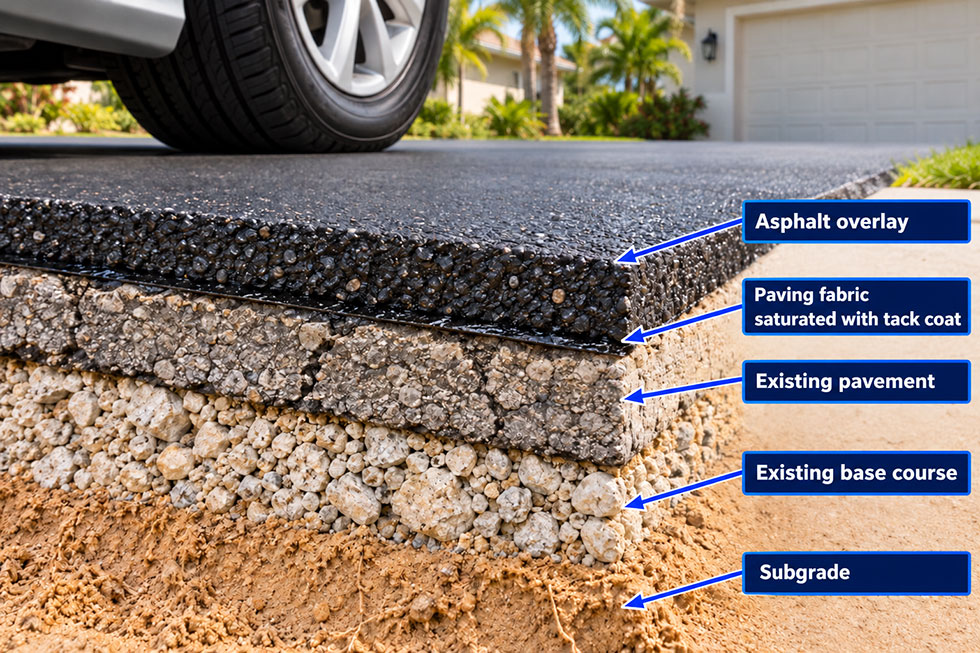
Can Resurfacing Fix a Driveway That Is Too Thin?
An overlay adds asphalt above the existing pavement. It requires a surface and foundation capable of supporting that added layer.
The Colorado driveway guidance referenced above describes a 1½–2-inch overlay after inspection and preparation. It also calls for repairing weak spots, holes and large cracks before placing new asphalt.
That preparation matters. An overlay cannot stabilize saturated soil or rebuild failed base material by covering it.
When paving over asphalt, the contractor also needs to check garage thresholds, sidewalks and adjoining surfaces. Raising the driveway must not create drainage or access problems.
At Trinity Asphalt Paving, we assess the existing pavement before recommending resurfacing, localized repairs or replacement.
What to Ask Before Your Driveway Is Paved
A clear proposal gives you something concrete to review. Ask these questions before approving the work:
- What finished compacted depth does the proposal specify?
- What base material and preparation does the project include?
- How will the crew address soft or unstable areas?
- Where will rainwater flow after paving?
- Does the design account for trucks, trailers or RVs?
- How will the contractor check depth and compaction?
For a Royal Palm Beach property adding a wider parking area, include the connection between old and new pavement in that discussion. The expanded section needs its own foundation and a planned transition.
Frequently Asked Questions
Is two inches of asphalt enough for a driveway?
Two inches alone does not tell you if a driveway design is adequate. The required asphalt driveway thickness depends on the mix, supporting layers, soil conditions and expected loads. Confirm the finished compacted depth and the complete pavement structure.
Does thicker asphalt prevent cracking?
Additional depth does not eliminate cracking. Water, unstable ground, unsupported edges and poor construction can damage thick pavement. The surface and foundation need to function together.
Can you measure pavement depth by looking at the edge?
An exposed edge shows conditions at that location. It does not establish depth across the driveway. Core samples provide direct measurements at selected points when an investigation requires them.
Do heavier vehicles require a different driveway design?
Yes. Heavier vehicles change the loads the pavement must carry. A driveway planned for trucks or trailers needs a design that accounts for those demands.
Get a Clear Plan Before You Pave
You deserve clear answers about what will support your driveway and how the work will address your property’s needs.
From residential entrances in Boca Raton to established driveways in Delray Beach, Trinity Asphalt Paving helps you choose a practical plan for installation, resurfacing or repair.
Tell us what you are seeing and how you use your driveway. We will explain the options and the work your pavement needs.
Click here or give us a call at 561-889-2615 for a free, no-obligation quote.
Trinity Asphalt Paving, Inc.
📍 6643 Royal Palm Beach Blvd. West Palm Beach, FL 33412
📞 Call 561-889-2615
- Posted by Trinity Asphalt Paving
- On October 27, 2026
- 0 Comment